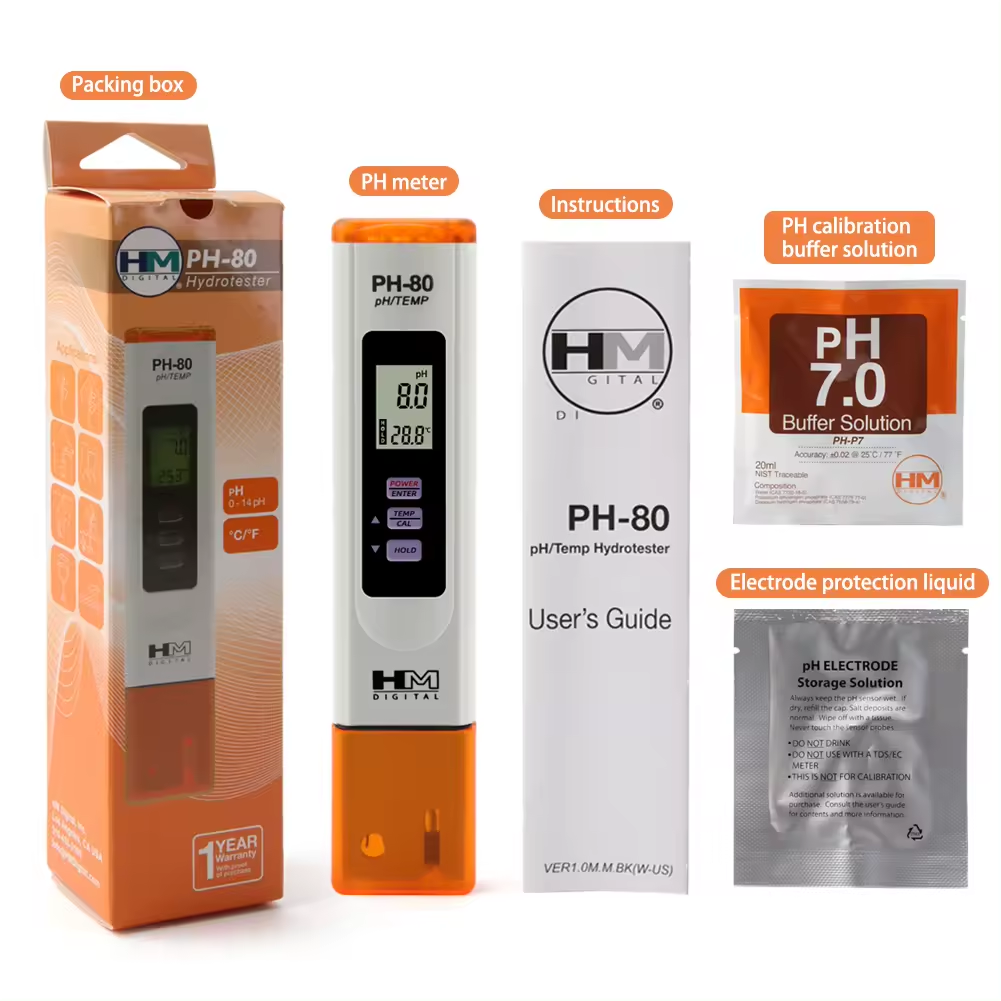
Water is at the heart of almost every business operation in the UAE — from the desalinated tap water flowing through hotel kitchens and swimming pools, to the process water in industrial cooling towers, the irrigation feeds in vertical farms, and the reverse osmosis systems that purify drinking water across the Emirates. Yet most businesses have no idea what their water actually contains. Two instruments fix that immediately: a pH meter and a TDS meter.
In 2026, with tightening municipal water quality regulations, rising consumer health awareness, and increasing operational costs linked to poor water management, these two compact instruments are no longer the preserve of laboratories. They belong in every professional kitchen, water treatment plant, pool facility, agricultural operation, and industrial process floor across the UAE. This guide explains exactly what these meters measure, why it matters here, and how to find the right instruments from ThermoPro UAE.
1. pH vs TDS — What Do They Actually Measure?
Before exploring applications, it's important to understand what these two meters measure and why they're complementary rather than interchangeable.
Acidity & Alkalinity
pH (potential of Hydrogen) measures how acidic or alkaline a liquid is on a scale of 0 to 14. Pure water sits at pH 7 (neutral). Below 7 is acidic; above 7 is alkaline. A pH meter uses an electrode sensor immersed in the liquid to measure the concentration of hydrogen ions and converts that to a pH value with precision to ±0.01 pH in professional models.
Total Dissolved Solids
TDS (Total Dissolved Solids) measures the total concentration of all dissolved substances in water — minerals, salts, metals, organic matter — expressed in parts per million (ppm) or milligrams per litre (mg/L). A TDS meter works by measuring the electrical conductivity of the water; the more dissolved solids present, the higher the conductivity, and the higher the TDS reading.
🔬 Key distinction: pH tells you the nature of what's dissolved (acidic or alkaline). TDS tells you the quantity of dissolved material. A liquid can have a neutral pH but extremely high TDS — like seawater, which is near-neutral pH but heavily loaded with dissolved salts. Professional water management requires both measurements.
2. Why the UAE's Water Makes Both Meters Essential
The UAE's water supply situation is unlike most countries. Nearly all drinking and municipal water comes from desalination plants — primarily multi-stage flash (MSF) and reverse osmosis (RO) processes — supplemented by limited groundwater sources. This creates a water chemistry profile with specific characteristics that every business should understand.
Desalinated Water Is Inherently Unstable
Pure RO and distilled water is slightly acidic (pH 5.5–6.5) and very low in TDS. To prevent it from corroding pipes, UAE water authorities re-mineralise it before distribution, pushing pH to 7.5–8.5 and TDS to 200–500 ppm. The exact values vary by emirate, season, and distribution network — meaning what comes out of your tap may not match what left the treatment plant.
Rooftop Storage Tanks Alter Water Chemistry
Most UAE buildings store water in rooftop tanks before distribution. These tanks — often made of fibreglass, GRP, or polyethylene — can leach compounds into water, alter pH, and contribute to TDS. In summer, tank water temperatures can exceed 50°C, accelerating chemical reactions and creating conditions for bacterial proliferation.
Hard Water & Scale Formation
Even after remineralisation, UAE water is classified as moderately hard to hard. High calcium and magnesium content (reflected in TDS readings) causes limescale deposits in boilers, coffee machines, dishwashers, cooling towers, and heat exchangers — reducing efficiency and shortening equipment life. Tracking TDS is the first step to managing scale.
Groundwater Contamination Risk
In areas using blended or agricultural groundwater — common in farming regions of Fujairah, Ras Al Khaimah, and Al Ain — TDS levels can exceed 2,000 ppm and pH can vary wildly depending on soil chemistry and depth. Without regular monitoring, these water sources can silently damage crops, equipment, and processes.
⚠️ Regulatory Note: UAE Federal Law No. 24 of 1999 on the Protection and Development of the Environment, along with Dubai Municipality and Abu Dhabi Environment Agency regulations, require businesses in food, hospitality, healthcare, and industrial sectors to demonstrate water quality monitoring. pH and TDS meters are the frontline tools for this compliance.
3. Who Needs Them? Industry-by-Industry
The range of businesses that benefit from pH and TDS measurement in the UAE is remarkably broad. Here are the key sectors and their specific requirements:
Hotels & Restaurants
Monitor drinking water quality, swimming pool chemistry, kitchen water for cooking and espresso machines, and dishwasher rinse water quality for HACCP compliance.
Swimming Pools & Spas
Pool water requires strict pH control (7.2–7.8) and TDS monitoring. pH imbalance causes chlorine inefficiency, eye irritation, and surface corrosion. High TDS signals the need for partial water replacement.
Hydroponics & Agriculture
Nutrient solution pH (5.5–6.5) and EC/TDS levels are critical to crop yields. Both too high and too low pH locks out nutrients regardless of how much fertiliser is applied.
Pharma & Laboratories
Pharmaceutical manufacturing, research labs, and cleanroom water systems require USP-grade purified water (TDS <10 ppm, pH 5–7). Continuous monitoring is a GMP requirement.
Industrial & Manufacturing
Cooling towers, boilers, plating baths, and process water all require pH and TDS control to prevent corrosion, scaling, and product quality failures. A 0.5 pH deviation in a plating bath can ruin an entire batch.
Specialty Coffee & Food Production
Extraction quality, fermentation control, and beverage taste are directly affected by source water pH (ideal: 6.5–7.5) and TDS (ideal: 75–250 ppm for espresso). Serious baristas and food producers measure both.
RO & Water Filter Systems
Verify that your reverse osmosis or water filter system is actually working by measuring TDS before and after the filter. A functioning RO system should reduce TDS by 90–99%.
Aquaculture & Aquariums
Marine and freshwater species have narrow pH tolerance bands. Even a 0.3 pH change can cause significant fish stress. TDS monitoring helps manage salinity and mineral balance in aquatic systems.
Cosmetics & Personal Care
Product formulation, batch quality control, and stability testing in cosmetics manufacturing all require accurate pH monitoring to ensure product safety, efficacy, and shelf life.
4. The Real Cost of Not Monitoring Water Quality
Ignoring pH and TDS leads to measurable, preventable losses across every sector. These are not edge cases — they are routine occurrences in UAE businesses without water quality monitoring programmes:
Accelerated Equipment Failure
Scale buildup from high TDS reduces boiler efficiency by up to 25% per mm of scale. Acidic water with low pH actively corrodes copper pipes, heat exchangers, and metal fittings — failures that cost tens of thousands of dirhams to repair and replace.
Food Quality & Taste Failures
Water with incorrect pH or excessive TDS imparts off-flavours in cooked food, beverages, and baked goods. For Dubai's competitive restaurant market, inconsistent water quality is an invisible saboteur of culinary outcomes and brand reputation.
Crop Losses in Agriculture
UAE farms and hydroponic operations using unmonitored irrigation water suffer silent nutrient lockout — plants appear to be fed but cannot absorb minerals at wrong pH levels. This can reduce yields by 20–40% without a visible cause until a pH meter reveals the problem.
Pool & Spa Health Violations
Dubai Municipality enforces strict pool water standards. pH outside 7.2–7.8 renders chlorine up to 90% ineffective even at correct dosing levels, creating health risks and potential closure notices for hospitality and leisure businesses.
Failed Lab & Pharma Batches
In pharmaceutical and cosmetics production, a single out-of-spec pH reading that goes undetected until QC stage can invalidate an entire production batch. Real-time monitoring at each process step prevents costly write-offs and regulatory non-conformances.
Regulatory & Audit Failures
Dubai Municipality, ESMA, and Abu Dhabi Agriculture and Food Safety Authority (ADAFSA) conduct routine inspections that include water quality checks. Inability to provide monitoring records is treated as a compliance failure with financial penalties and potential operating restrictions.
5. How to Choose the Right pH and TDS Meter
The right instrument depends on your application's precision requirements, the environment you're working in, and whether you need spot-checking or continuous monitoring. Here's how the key specifications map to common UAE use cases:
| Specification | Entry / Hospitality | Professional / Industrial |
|---|---|---|
| pH Range | 0–14 pH | 0–14 pH (extended electrode range) |
| pH Accuracy | ±0.1 pH | ±0.01 pH (lab / pharma grade) |
| TDS Range | 0–9,990 ppm | 0–9,999 ppm / multiple ranges |
| TDS Accuracy | ±2% | ±1% or better |
| Auto Temperature Compensation (ATC) | ✓ Essential — UAE temps affect readings | ✓ Required for all serious work |
| Calibration | 1-point calibration (pH 7) | 2–3 point calibration (pH 4, 7, 10) |
| IP Rating | IP54 splash-proof | IP67 waterproof for field/outdoor use |
| Buffer Solutions | Included or available | Traceable calibration buffers required for compliance |
| Data Output | Display only | USB / Bluetooth data logging for audit trails |
Combination Meters: pH + TDS + EC + Temperature in One
Many professional users benefit from a multi-parameter meter that measures pH, TDS, EC (electrical conductivity), and temperature simultaneously. This is particularly valuable for hydroponics, pool management, and industrial process water where all four parameters are routinely monitored together. ThermoPro UAE stocks multi-parameter options across their pH meter and TDS meter ranges.
Don't Forget Buffer Solutions & EC Meters
A pH meter is only as accurate as its last calibration. pH buffer solutions — standardised liquids at known pH values (4.01, 7.01, 10.01) — are essential consumables that must be replaced regularly. Similarly, for agricultural, aquatic, and industrial users, an EC meter and a salinity meter extend your water quality picture beyond pH and TDS alone.
pH Meters — Hospitality & Professional Range
From pocket-sized pen pH meters for kitchen and pool spot-checks to bench-top laboratory pH meters for pharmaceutical and research applications, ThermoPro UAE stocks instruments with Auto Temperature Compensation, multi-point calibration, and compliance-grade accuracy for every professional need in the UAE.
Browse pH Meters → pH Buffer SolutionsTDS Meters — Verify Your Water Quality Instantly
Check whether your RO filter is performing, verify drinking water purity, monitor your cooling tower's dissolved solids concentration, or test your hydroponic nutrient solution — all with a compact, accurate TDS meter. ThermoPro's range covers entry-level pen meters to professional multi-range instruments.
Browse TDS Meters →6. ThermoPro UAE's pH & TDS Meter Range
ThermoPro UAE supplies water quality measurement instruments to hotels, restaurants, farms, laboratories, pool management companies, and industrial operators across Dubai, Abu Dhabi, Sharjah, and the wider UAE and GCC. Their team provides expert guidance on instrument selection, calibration procedures, and compliance documentation.
7. 6 Pro Tips for Accurate pH & TDS Readings
Always Calibrate Before Use
pH electrodes drift over time and must be calibrated regularly using standard buffer solutions. For food safety and compliance applications, calibrate at the start of every working day. For industrial and lab use, 3-point calibration (pH 4, 7, and 10) covers the full measurement range.
Always Use ATC — Especially in the UAE
pH readings are highly temperature-dependent. In the UAE, process water, swimming pools, and outdoor samples can range from 15°C (chilled) to 60°C (sun-heated). Auto Temperature Compensation (ATC) corrects for this automatically. Never trust pH readings from an instrument without ATC in UAE field conditions.
Rinse with Distilled Water Between Samples
Carry a small squeeze bottle of distilled or deionised water (TDS <5 ppm) and rinse the pH electrode and TDS probe between each sample to prevent cross-contamination. Pat dry with a lint-free tissue — do not rub, as this creates static charges that affect readings.
Keep pH Electrodes Moist
pH glass electrodes must never be stored dry. Always store in the electrode storage solution or, if unavailable, in a pH 4 buffer solution or tap water. A dried-out electrode gives erratic readings and has a shortened lifespan — a common and avoidable mistake in UAE kitchens and labs where meters sit unused between inspections.
Test at the Right Depth & Location
For pools and tanks, pH and TDS vary with depth and proximity to inlet/outlet points. Take multiple readings at different depths and locations and use the average. For process water, sample from the middle of the flow, not the edge where stagnation can cause localised pH shifts.
Record, Don't Just Read
A measurement you don't record is just an observation. For HACCP compliance, pool regulations, and industrial quality control, readings must be logged with timestamps, sample location, operator name, and corrective actions taken. Use a data-logging meter or a structured paper log linked to your quality management system.
8. Frequently Asked Questions
What is a good TDS level for drinking water in the UAE?
How often should I calibrate my pH meter?
What is the correct pH for a swimming pool in Dubai?
What is the difference between TDS and EC meters?
Can one meter measure both pH and TDS?
Where can I buy a pH meter or TDS meter in Dubai?
Know Exactly What's in Your Water — Starting Today
From a pocket pH pen for your kitchen to a certified industrial TDS meter for your production line — ThermoPro UAE has the right water quality instrument, backed by local expertise and fast UAE-wide delivery.
Shop pH Meters Shop TDS Meters